
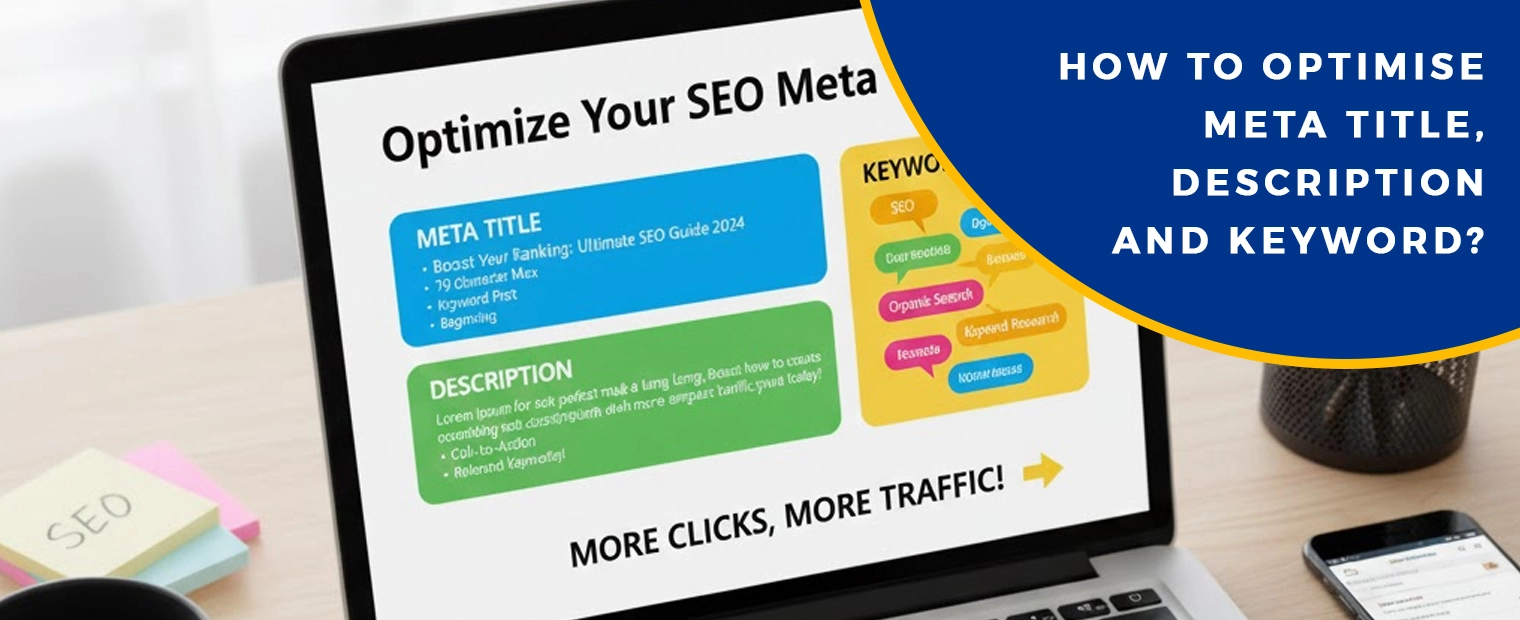
How To Optimise Meta Titles, Meta Descriptions and Keywords for Better Ranking
Meta titles and descriptions are among the most crucial elements of on-page SEO, which is based on tiny details that have a significant influence. Despite their seeming insignificance, these components have a direct impact on how search engines interpret your pages and how people choose to click on your website. When properly optimised, keywords, descriptions, and meta titles increase visibility, click-through rates, and overall SEO effectiveness. Understanding these principles is essential for businesses. Working with a high-performing SEO company in Chennai, like Webboombaa, can lead to developing a strong online presence.
What are meta titles and descriptions?
HTML components that give an overview of a webpage’s content are called meta titles and meta descriptions. In search engine results, the meta description offers a brief synopsis beneath the meta title, which serves as the clickable headline. When combined, they serve as your website’s initial impression in search results and are vital for drawing in targeted visitors.
Why Optimising Meta Matters in SEO
Meta titles are used by search engines to determine a page’s main subject. While an engaging meta description affects whether consumers click on your result, a clear and pertinent title helps raise ranks. Meta descriptions have a big impact on click-through rates, which indirectly boost SEO performance even though they are not a direct ranking criterion. Top SEO agencies in Chennai concentrate on user and search engine optimisation. 5% of top-ranking pages had optimised meta titles under recommended lengths.
Writing SEO-friendly Meta Titles
A meta title should be short, informative, and consistent with the search objective. It should naturally contain the main keyword and provide a vivid explanation of the page’s purpose. To prevent shortening of the title’s length in search results, meta titles should perfectly adhere to the suggested character restrictions. Stay clear with no keyword stuffing and concentrate on readability, relevancy, and clarity. Both rankings and user trust are enhanced by well-written titles.
The Best Ways to Improve Meta Descriptions
In order to promote clicks, meta descriptions should provide an overview of the content from the site. Concentrate on conveying value and relevancy rather than just focusing on overuse of keywords. A compelling description makes the outcome more enticing by providing an answer to the user’s query or emphasising a benefit. Engagement and search visibility are increased by using natural keywords, clear language, and active voice.
Placement of Keywords in Meta Tags
In meta optimisation, keywords are crucial, but placement is more significant than that. Repetition or overusage of keywords may affect rankings and retention. The meta title and meta description should both organically contain the main (primary) keyword. Only when they make sense can secondary keywords be used. Clarity and intent are more important than keyword density since search engines are intelligent enough to recognize context.
Matching Search Intent with Meta Tags
When meta optimization is in line with user purpose, it functions optimally. While commercial pages should highlight value and action, informational pages should concentrate on clarity and usefulness. Effective meta content is shaped by knowing whether readers are comparing, investigating, or prepared to convert. To draw in high-quality visitors, SEO specialists at Webboombaa place a high priority on intent-driven optimization.
Common Mistakes to Avoid When Optimising Meta
- Using false/duplicate titles
- Leaving out or missing description
- Using a lot of keywords
- Meaningless generic content
- Unique but relevant meta tags for each page’s content
- Do not use same titles and descriptions over several pages
These commonly made mistakes could misguide and confuse search engines and affect relevancy signals.
Optimising Meta Tags for AI and Semantic Search
AI is used by modern search engines to understand meaning beyond keywords. Instead of using automated terms, meta titles and descriptions should include natural language and context. Creating naturally readable meta content raises the likelihood of appearing in rich snippets and AI summaries and enhances relevance for AI-powered search results.
Meta Tags’ Impact on Click-Through Rate (CTR)
CTR can be greatly increased with a well-optimised meta title and description. Poor meta content might lead to low engagement even if a page ranks well. Effective meta language persuades people that your content is the best response to their query by acting as an advertisement for your website. Pages with title tags between 40 and 60 characters can see significantly higher click-through rates.
Strategic Use of Keywords in Content
On-page content and meta optimisation should complement each other. Headings, body text, URLs, and internal links should all organically contain the keywords used in meta tags. Maintaining consistency between meta tags and site content enhances credibility and facilitates a more accurate understanding of topic relevance by search engines.
Tracking and Updating Meta Performance
SEO is a continuous process. Low-performing meta tags can be found by tracking impressions, clicks, and CTR using tools like Google Search Console. When continuous improvement is ensured, and material is kept in line with changing search behaviour by reworking with new titles and descriptions based on performance history.
How Meta Optimisation Gains Value from an SEO Agency
It takes strategy, examining, and exploring to optimize meta tags at scale. Meta titles, descriptions, and keywords are optimised not just for rankings but also for well-deserving business results by a reputed SEO agency in Chennai like Webboombaa. Also, long-term growth and increased organic visibility are supported by their strategic meta optimisation.
Effective on-page SEO is based on the placement of keywords, meta descriptions, and titles. They raise rankings, boost click-through rates, and generate quality traffic when optimised with clarity, purpose, and user-friendliness in mind. Natural language and relevancy are more crucial than we think in an AI-paced search environment. But this challenge can be handled with grace when working with an expert Chennai SEO specialist like Webboombaa, who guarantees that your meta optimisation plan will be accurate and designed for long-term search growth.
Frequently Asked Questions (FAQs)
They are HTML elements that describe page content and appear in search engine results.
They don’t directly affect rankings but strongly influence click-through rates.
Meta titles should be concise and within recommended character limits to avoid truncation (shortening of titles exceeding limits).
Write clear, compelling summaries that match search intent and encourage clicks.
Yes, primary keywords should be included naturally for relevance and clarity.
Yes, duplicate meta titles confuse search engines and reduce ranking potential.
Meta keywords are outdated, but correct keyword placement in titles and content still matters.
Meta tags should be reviewed regularly based on performance and search behavior changes.
Yes, clear and relevant meta tags help AI understand and summarize page content.
Yes, well-written meta titles and descriptions significantly improve click-through rates.