
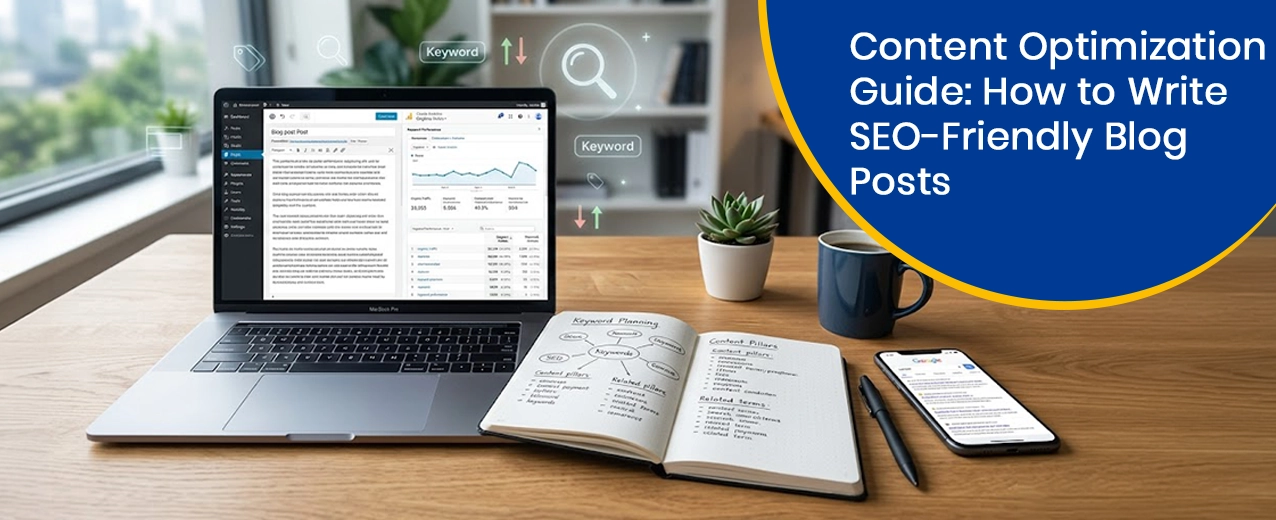
Content Optimization Guide: How to Write SEO-Friendly Blog Posts
You publish blogs for your business. But the traffic? Still low. Organic visitors barely find you.
Here’s the reality: businesses that blog generate 55% more website traffic. The difference is not just publishing content but optimizing it correctly.
This guide shows you exactly how to optimize every blog post for better visibility.
What is SEO Writing?
SEO writing is the process of creating content that works for both search engines and readers. It means using the right keywords, clear headings, and helpful information so your content appears in search results.
Key components of SEO Writing:
- Choose the right search terms
- Keywords should match user intent and what users actually want to find
- Write an optimized title that includes the main keyword naturally
- High-quality content with relevant information
- Internal linking to connect related pages on your website
- External linking to trusted and relevant sources
- Easy readability with short sentences
- Optimized URL
- Image optimization with proper alt text and reduced file size
4 Easy Steps to Write an SEO-friendly Blog Post in 2026
Step 1 – Keyword Research and Planning
i) Understanding Search Intent and Keyword Selection
Keyword research finds what people type into search bars. Match those terms to your business topics. The goal is to build a list of top keywords, which are the ones that rank your blog high.
People always search with intent. They want answers fast. Pick terms with solid volume but low competition. Tools like Ahrefs, Semrush, and Google Keyword Planner help. Aim for long-tail keywords. For example, phrases like “how to write SEO blog posts for beginners.”
Check our keyword research blog for more tips.
ii) Structure Content with Pre-Writing Outlines
Don’t just start typing. Plan first. Good blogs come from solid outlines.
Grab free templates online. They cover how-tos, lists, “what is” posts, and more.
Sketch key points and order them logically. Note spots for images, videos, or fun memes.
- Step 1: Pick a post type.
- Step 2: Jot main ideas under each section.
- Step 3: Add media plans.
Step 2: Crafting Headlines for Better Clicks
i) Write High-Performing SEO Titles
Your headline is the first thing people see in search results and on social media. It decides whether they click or ignore your post.
Place your main keyword at the beginning. Clearly mention the benefit so readers know what they will gain. Keep it simple and direct.
You can add a light call to action and use emotion where it fits. Keep the title under 60 characters so it displays fully on all devices. Read in detail.
ii) Leverage Tools for Headline Optimization
Use free tools to test your headline ideas. Tools like Headline Analyzers can score your title for SEO strength and click potential.
You can also use headline templates to guide your word choice and structure. They help you write clearer and stronger titles step by step.
Create multiple variations and compare them. Choose the one that sounds clear, keyword-focused, and benefit-driven. Make sure you place the keyword at the beginning to improve visibility.
Check this example:
- “Best Running Shoes”
- “Top 10 Running Shoes of 2026”
The second option is more specific, timely, and compelling in comparison with the first title.
Step 3: Write a Description That Satisfies Readers and Algorithms
i) The Strategic Introduction Formula
Start with a strong hook. Tell readers why this topic matters to them. Include your main keyword within the first one or two sentences.
Clearly mention who the content is for and what benefit they will gain. Briefly tell them what they can expect in the article.
For example: “Struggling with SEO-optimized blog posts? Small business owners lose traffic every day. Here’s how to fix it step by step.”
This shows relevance to both search engines and readers. Keep the introduction short and focused, ideally within three sentences.
ii) Structure Content for Readability & Authority
Break your content into small sections. Keep each idea within two or three sentences so it is easy to read and skim.
Avoid long, dense paragraphs. Short, clear blocks keep readers engaged.
Use bullet points or numbered lists when explaining steps. They make information easier to follow.
Add internal links to related pages on your website and link to trusted external sources when needed. This builds credibility and trust.
Include real examples to strengthen your points. Well-structured content builds authority, and authority helps drive more traffic.
iii) Integrate Secondary Keywords
Use secondary keywords to support your main keyword. Add them naturally within your content. This helps your page rank for more search queries without keyword stuffing.
Many high-ranking articles succeed because they cover related terms in a smooth and logical way. There are no tricks involved, just smart and natural writing. Over time, ranking for multiple related terms can significantly increase traffic.
iv) Utilize Subheadings for Topical Segmentation
Organize your content under clear subheadings. Treat each subheading like a small headline that introduces a specific idea.
Format them properly as H2 or H3 so search engines can easily understand your content structure.
Strong subheadings guide readers through the article and improve SEO at the same time.
Step 4: Advanced Optimization Beyond the Text
i) Maximize Image Value Through Alt Text
Add images, charts, or visuals to break up text and explain ideas better.
Write clear and descriptive alt text for each image. Describe what the image shows inherently, including a relevant keyword where it fits.
Well-written alt text helps your content appear in image search results and brings additional traffic to your site.
Read the detailed guide on image optimization for SEO.
ii) Target Google Featured Snippets
Featured snippets appear at the top of search results in a highlighted box.
To improve your chances, answer questions clearly and directly. Use short paragraphs, lists, or step-by-step formats.
When your content is structured clearly, search engines can easily pull it as a featured result, increasing visibility.
iii) Master Meta Tags for Search Display
Meta tags control how your page appears in search results.
Optimize your title tag for clarity and keywords. Write a compelling meta description that encourages clicks.
Keep your URL short and clean, using only relevant keywords. These small optimizations can improve visibility and increase click-through rates. Know more in detail about SEO URL optimization.
Conclusion
Follow this simple process every time you write. Start with keyword research. Plan your outline. Create a strong headline. Write clear and structured content. Then finish with proper optimization.
Key Takeaways
- Keyword research builds the foundation.
- A clear outline keeps your content focused.
- Strong headlines attract clicks, and introductions keep readers engaged.
- Short paragraphs with internal and external links build authority.
- Images, featured snippet formatting, and optimized meta tags strengthen performance.
Turn this into a complete strategy. Train your team to follow the same structure. As consistency grows, traffic grows with it.
To get a proven SEO-friendly blog template from the top digital marketing agency in Chennai, contact Webboombaa. Get it today.
Frequently Asked Questions (FAQs)
ChatGPT, Google Gemini, QuillBot, and Hemingway Editor.
Usually 800 to 1500 words, but quality matters more than length.
Write helpful content, use the right keywords, and structure it clearly.
It helps your blog show up on search engines and bring more visitors.
Use keyword research tools like Ahrefs, Semrush, and Google Keyword Planner.